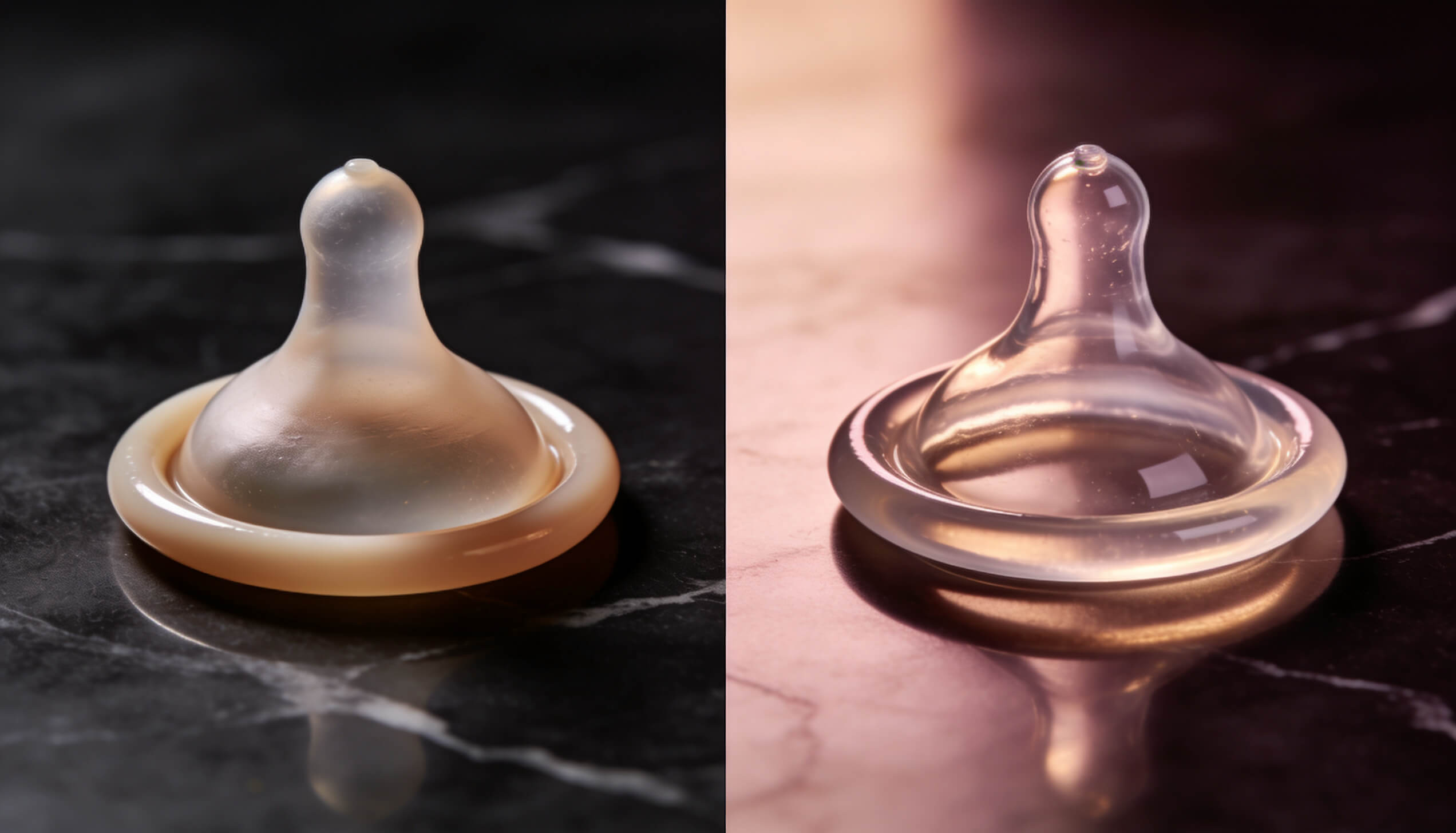
Most people choose condoms by price, brand familiarity, or whatever is available at the pharmacy. Material is an afterthought — if it’s even considered at all.
But condom material determines almost everything: how it feels, whether it causes reactions, how well it transmits sensation, and how it behaves under different conditions. This is a complete, honest comparison — not a sales pitch for one material over the other.
Polyurethane vs latex condoms — which is better?
Polyurethane wins on thinness (18 vs 50–70 microns), heat transfer, odour, allergy safety, and per-unit testing. Latex wins on price and stretch/fit tolerance. For maximum sensation and latex-free protection, Sagami Original 0.01 (PU) is the premium choice now available in India.
A Brief History of Each Material
Latex has been the dominant condom material since the 1920s — made from natural rubber tree sap. The Indian market is almost entirely latex.
Polyurethane was developed as a genuine alternative, not just a variant. Sagami Rubber Industries began joint research in 1965. Sagami Original launched in 1998: the world’s first commercially available PU condom. The 0.01 — at 18 microns — launched in 2013 and became Japan’s best-selling premium condom by 2014.
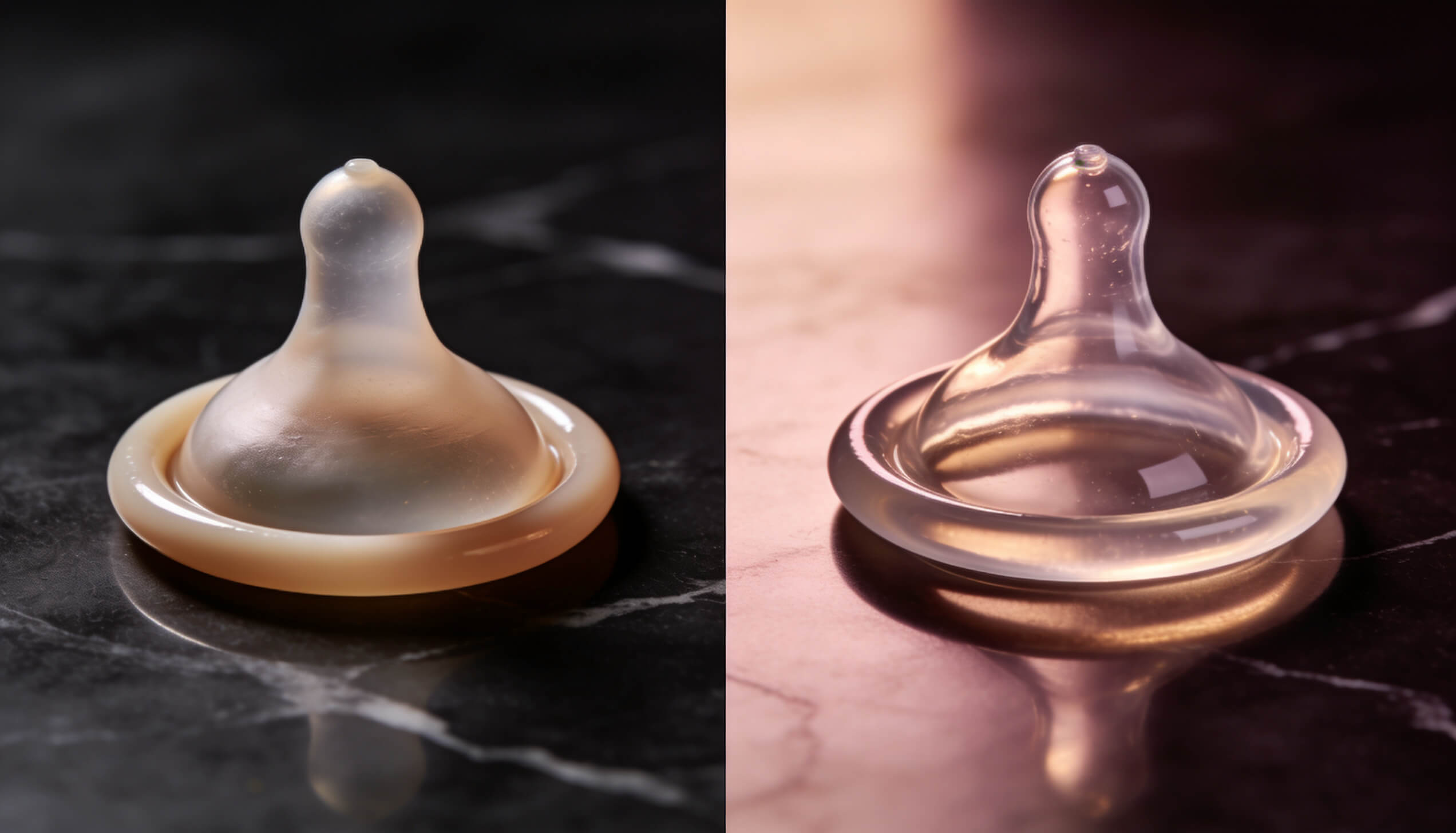
The Core Comparison: 8 Dimensions That Actually Matter
1. Thickness
| Material | Typical Thickness |
|---|---|
| Standard latex | 55–70 microns |
| Ultra-thin latex | 42–55 microns |
| Polyisoprene | 60–80 microns |
| Sagami Original 0.01 (PU) | 18 microns |
Sagami 0.01 is roughly 2.5 to 4 times thinner than the thinnest latex condoms currently available in India. This isn’t a marginal difference — it’s a different order of magnitude.
2. Strength and Durability
Polyurethane is stronger than latex per unit of material, despite being thinner. Sagami Original 0.01 — at just 18 microns — is 3 to 5 times stronger than a standard Sagami latex condom. Every single unit is 100% electronically tested — most latex manufacturers test by sampling, not 100% per unit.
Important caveat
Polyurethane is less elastic than latex. Sizing matters more with PU condoms — if the fit is wrong, slippage risk increases. This is why Sagami offers Standard and L-sizes.
3. Sensation and Heat Transfer
Latex is a poor thermal conductor — there’s often a “cool” sensation at first contact. Polyurethane transmits body heat nearly as efficiently as bare skin. For many users, this is the single most significant experiential difference.
4. Allergy and Sensitivity
This is binary: latex causes allergic reactions in 7–10% of people; polyurethane does not. PU is fully biocompatible (ISO 10993) with zero natural rubber proteins.
5. Smell
Latex has a characteristic rubber smell. Polyurethane: completely odourless.
6. Lubricant Compatibility
| Lubricant Type | Latex | Polyurethane |
|---|---|---|
| Water-based | Compatible | Compatible |
| Silicone-based | Compatible | Compatible |
| Oil-based (coconut oil, etc.) | Degrades latex | Avoid — can affect PU too |
7. Shelf Life and Storage
Latex condoms typically last 3–5 years and are sensitive to heat, UV, and humidity — common issues in an Indian climate. Polyurethane is more stable: Sagami Original 0.01 has a 5-year shelf life and is more resistant to heat degradation.
8. Cost
Latex is cheaper. Sagami Original 0.01 is a premium product — but that premium buys 18-micron thickness, 100% electronic testing per unit, five-year shelf life, zero latex allergen risk, and superior heat conductivity.
Summary: Which Should You Choose?
Choose Latex If…
- Budget is the primary consideration
- You have no latex sensitivity
- You don’t find the smell or thermal barrier significant
- You want the widest available size range
Choose Sagami Original 0.01 (PU) If…
- You or your partner have latex sensitivity or allergy
- Maximum sensation and skin-to-skin feeling matters
- You want a completely odourless experience
- You value 100% per-unit electronic testing
- You want the closest thing to “nothing” with full protection
Frequently Asked Questions
Is polyurethane as safe as latex for STI prevention?
Yes, when used correctly. Polyurethane is non-porous. Properly fitted PU condoms provide protection equivalent to latex against STIs including HIV.
Which is better for sensitive skin?
Polyurethane. No natural proteins, no rubber smell, no latex allergens.
What is the best polyurethane condom available in India?
Sagami Original 0.01, available through justpleasure.in — 18-micron thickness, 100% electronic testing, direct authorisation from Sagami Rubber Industries, Japan.
Can women feel the difference between latex and polyurethane?
Yes. Both the thermal conductivity advantage and the lack of rubber smell are perceptible to both partners.
How do I know what size to buy?
Start with Standard (55mm nominal width) if standard latex fits comfortably. If standard latex is too tight or short, try L-Size (38mm diameter, 190mm length).
India finally has access to the world’s thinnest polyurethane condom.
Related posts
 Sexual Wellness